
Be a costume deisgner. Design costumes that tell the story and get hired to do it
A complete professional training in costume design for film, TV, and theater from script breakdown to portfolio launch with AI tools built into every stage of your workflow.
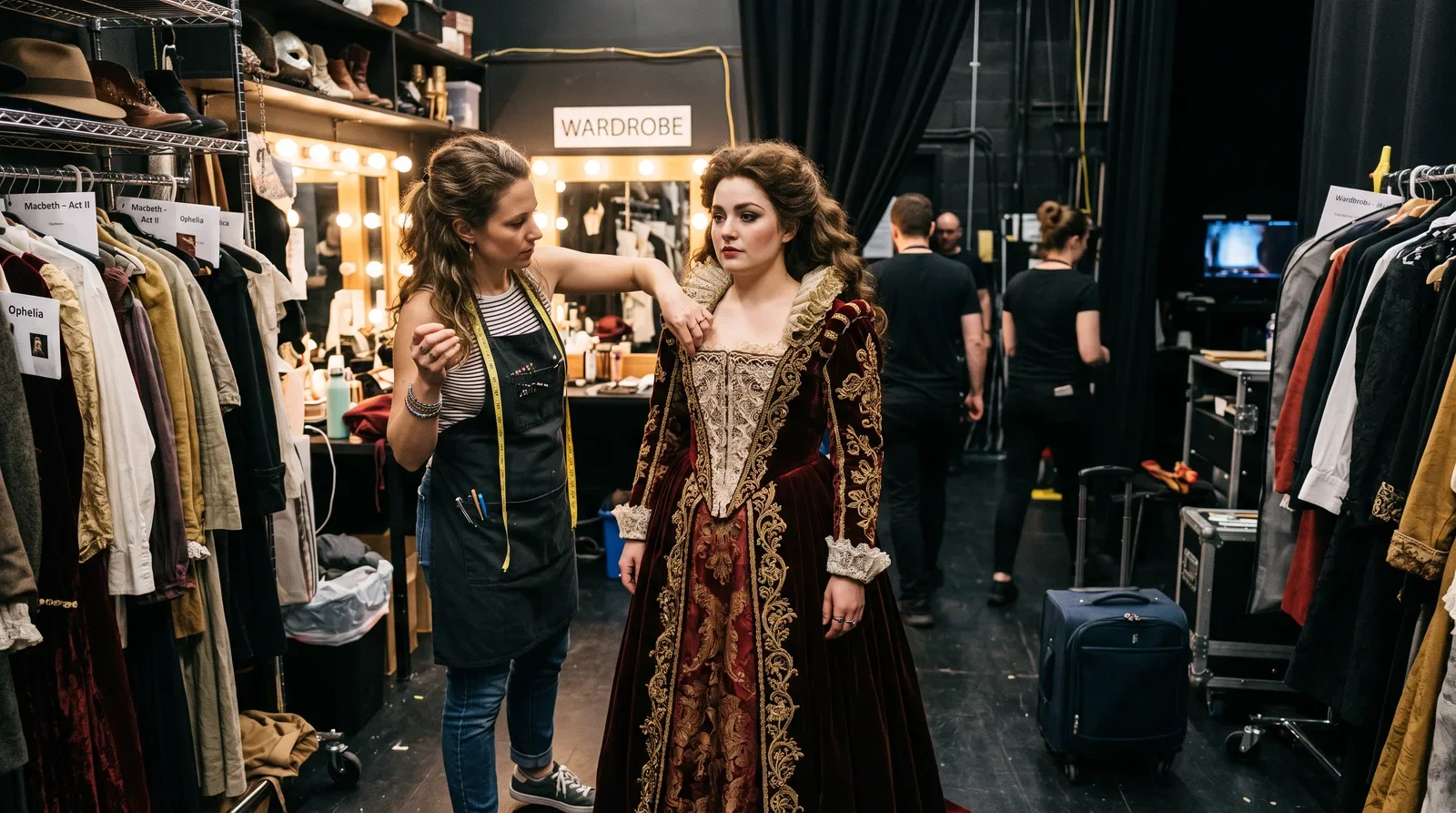
"Costume design is a narrative craft with a production deadline. I teach you to do both, at the same time, at a professional standard."
— Jennifer Xue, StyleCareer.com lead course developer
What you'll learn
What you'll be able to do
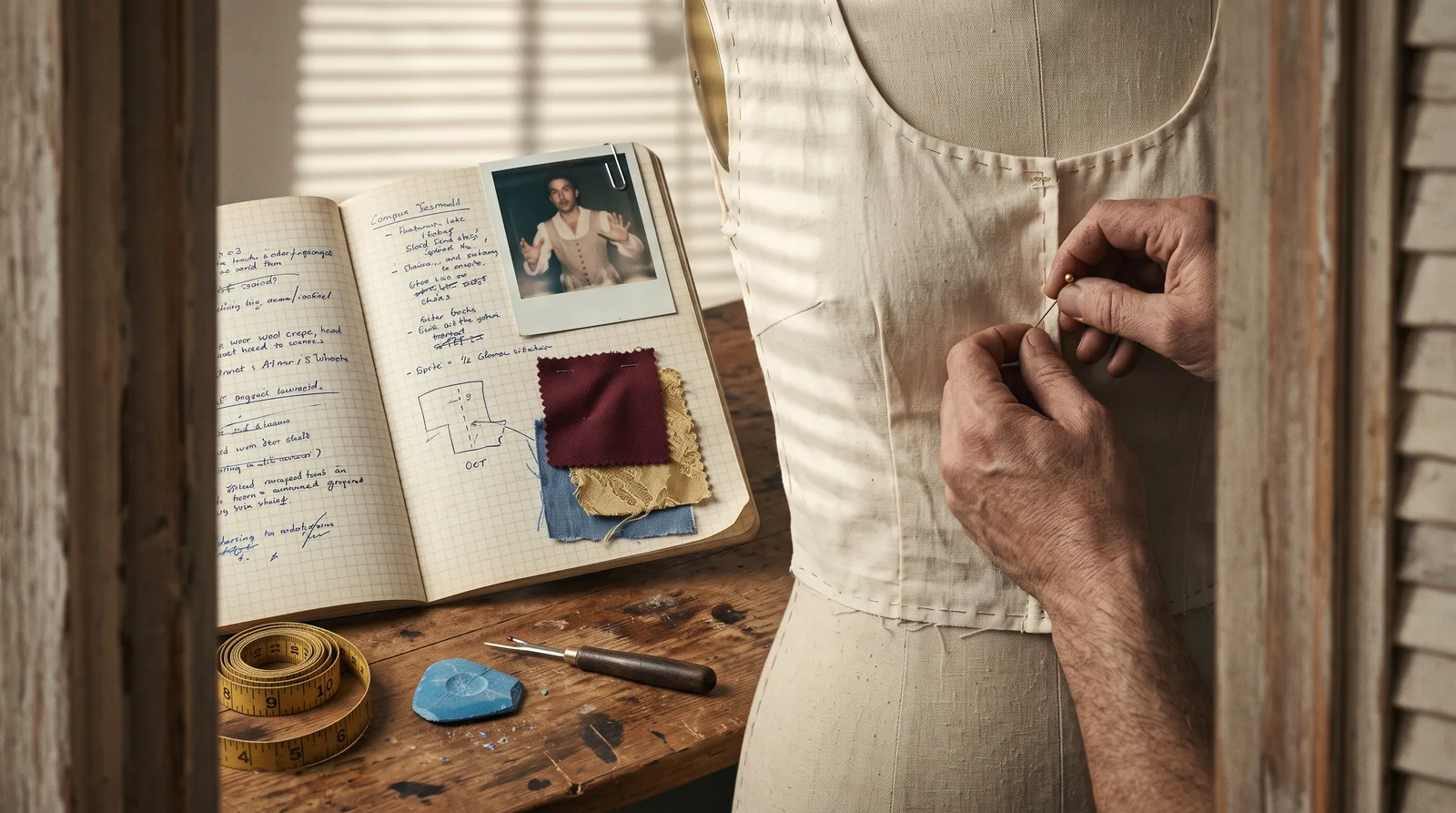
- Read a script and extract character psychology into a fully developed, production-ready costume concept
- Build period-accurate research decks using archives, primary sources, and AI visual reference tools
- Create costume renderings, mood boards, and character boards at a professional portfolio standard
- Manage real production logistics: actor fittings, continuity tracking, budget spreadsheets, and multiples planning
- Navigate the costume department hierarchy and collaborate effectively with directors, DPs, and production designers
- Assemble a compelling portfolio and reel, and map a concrete entry strategy into IATSE-affiliated film, TV, or theater work
How it works
A school that adapts to you
This isn't a set of static videos. Every lesson is generated live and tuned to where you actually are.
We learn your level
A quick placement check tailors your starting point so you're never bored or lost.
Lessons adapt as you go
Each lesson is written for your pace and your goal, adjusting as your skills grow.
Your AI coach keeps you moving
Checkpoints, feedback, and gentle nudges turn progress into a real result.
The curriculum
What's inside your school
12 modules · 48 lessons
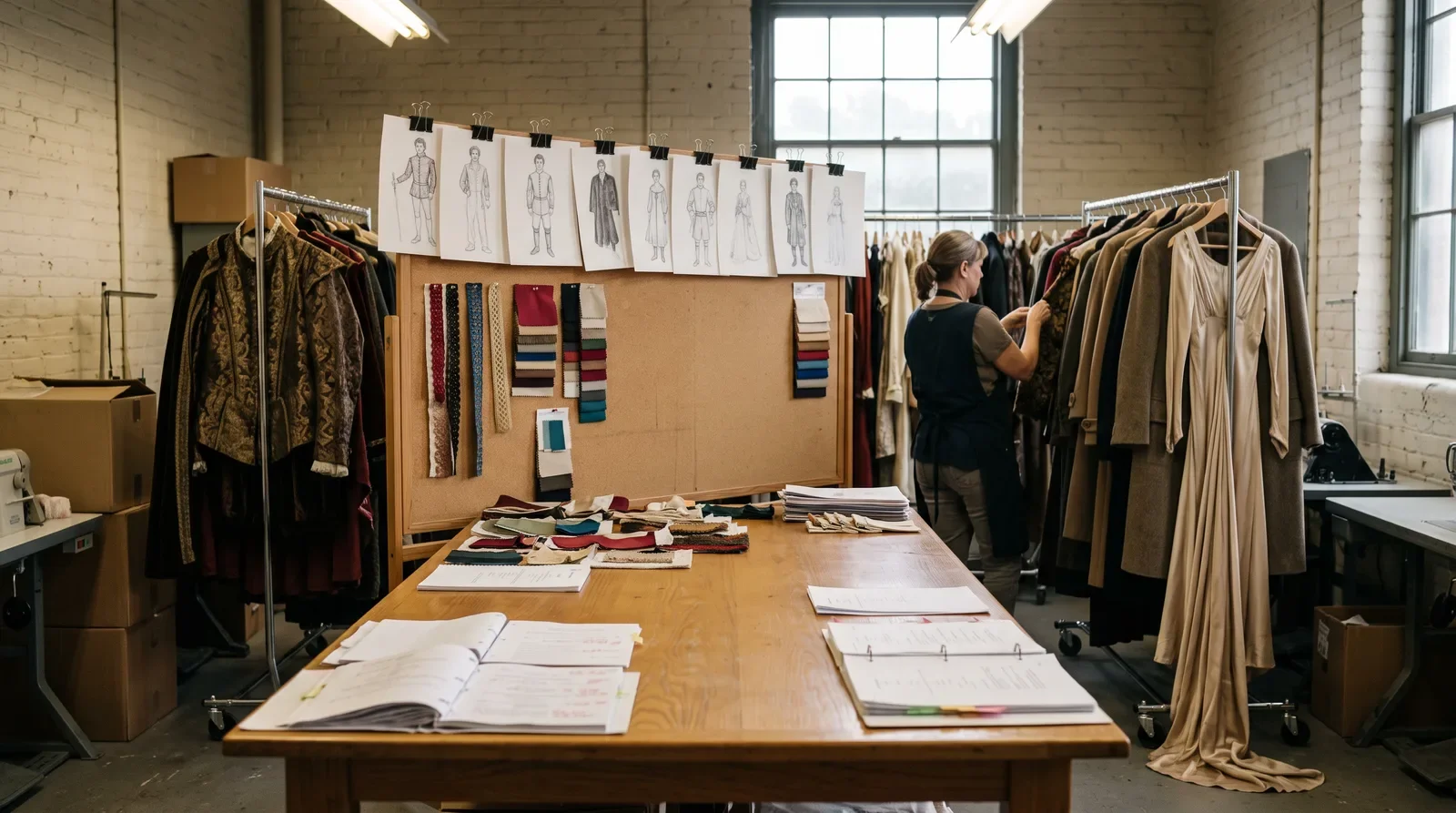
Myths & Realities of the Costume Designer Profession
Dismantles common misconceptions about costume design and establishes what the job truly demands in professional production.
- 1.1What a Costume Designer Actually Does (vs. What People Think)Included
- 1.2Myth-Busting: "It's Just Fashion Design for Actors" and Other MisconceptionsIncluded
- 1.3Costume Designer vs. Fashion Designer vs. Wardrobe Stylist — Clarifying the ConfusionIncluded
- 1.4A Day in the Life: Real Costume Designers, Real WorkflowsIncluded
Foundations of Costume Design
Builds the professional and structural knowledge every costume designer needs before stepping onto a production.
- 2.1The History and Evolution of Costume Design as a CraftIncluded
- 2.2Costume Design for Film vs. TV vs. Theater vs. Live EventsIncluded
- 2.3The Role of the Costume Designer Within a ProductionIncluded
- 2.4Key Roles in a Costume Department (Assistant to Costume Supervisor)Included
Character-Driven Design
Teaches students to translate script analysis and character psychology into purposeful, story-serving costume choices.
- 3.1Reading a Script: Extracting Character and World-Building CluesIncluded
- 3.2Translating Character Psychology Into Visual ChoicesIncluded
- 3.3Costume as Narrative Tool: Status, Change, and SubtextIncluded
- 3.4Practical Exercise: Build a Character Costume Concept from a Script ExcerptIncluded
Period & Historical Research (with AI Tools)
Equips students to conduct rigorous historical research and leverage AI tools to build production-ready reference decks.
- 4.1Research Methods: Archives, Museums, and Primary SourcesIncluded
- 4.2AI-Assisted Historical Research and Visual Reference GatheringIncluded
- 4.3Balancing Historical Accuracy with Dramatic LicenseIncluded
- 4.4Practical Exercise: Build a Period-Accurate Research Deck Using AI ToolsIncluded
Costume Sketching & Visualization
Develops students' ability to communicate costume concepts visually through rendering, boards, and AI-assisted tools.
- 5.1Costume Rendering Techniques vs. Fashion IllustrationIncluded
- 5.2Building Character Boards and Mood BoardsIncluded
- 5.3AI-Assisted Concept Art: Visualizing Costumes Before ProductionIncluded
- 5.4Practical Exercise: Create a Costume Rendering for a Lead CharacterIncluded
Construction, Sourcing & Period-Accurate Techniques
Covers the hands-on decision-making around building, sourcing, and altering costumes to meet production demands.
- 6.1Building vs. Sourcing vs. Altering: Making the CallIncluded
- 6.2Period Construction Techniques and SilhouettesIncluded
- 6.3Working with Costume Shops, Rental Houses, and Vintage SourcingIncluded
- 6.4Practical Exercise: Develop a Build-vs-Source Plan for a SceneIncluded
Fittings, Continuity & On-Set Collaboration
Prepares students for the on-set realities of actor fittings, continuity management, and cross-department collaboration.
- 7.1Running Actor Fittings: Process and CommunicationIncluded
- 7.2Continuity: Tracking Costumes Across Scenes and TakesIncluded
- 7.3Working with Directors, DPs, and Production DesignersIncluded
- 7.4Practical Exercise: Build a Continuity Tracking SheetIncluded
Budgeting & Production Logistics
Gives students command of the financial and scheduling tools that keep a costume department running on time and on budget.
- 8.1Costume Budgeting: Estimating and Tracking CostsIncluded
- 8.2Managing Multiples, Doubles, and Stunt CostumesIncluded
- 8.3Scheduling Around Shoot Days and Production TimelinesIncluded
- 8.4Practical Exercise: Build a Costume Budget for a Short ProductionIncluded
Designing for Different Genres & Formats
Expands students' design range across period drama, contemporary, fantasy, theater, and episodic television.
- 9.1Designing for Period Drama vs. Contemporary vs. Fantasy/Sci-FiIncluded
- 9.2Costume Design for Theater: Stage Visibility and Quick ChangesIncluded
- 9.3Costume Design for TV: Episodic Continuity and TurnaroundIncluded
- 9.4Practical Exercise: Design a Costume Concept for a Fantasy CharacterIncluded
AI & Technology Transforming Costume Design
Examines the current AI and digital tool landscape and equips students to use it responsibly and effectively.
- 10.1The AI Costume Design Stack: Concept Art and Reference GenerationIncluded
- 10.2Using AI for Period Research and Rapid Visual IterationIncluded
- 10.3Virtual Costume Visualization and Pre-Production ToolsIncluded
- 10.4Ethical Considerations: Historical Accuracy, Authorship, and AI LimitationsIncluded
Building Your Portfolio & Personal Brand
Guides students in assembling a compelling, professional-grade portfolio and an online presence that gets them hired.
- 11.1What a Costume Design Portfolio Should IncludeIncluded
- 11.2Documenting Process: Sketches, Research, and Final LooksIncluded
- 11.3Building a Reel and Online Presence for Film/TV/Theater WorkIncluded
- 11.4Practical Exercise: Assemble Your Costume Design PortfolioIncluded
Breaking Into the Industry & Career Growth
Delivers a concrete, actionable roadmap for entering the costume department and advancing toward a full designer credit.
- 12.1Entry Points: Costume Assistant, Costume PA, Wardrobe DepartmentIncluded
- 12.2Joining the Union: IATSE and Costume Guild PathwaysIncluded
- 12.3Networking Within Film, TV, and Theater Production CirclesIncluded
- 12.4Career Pathways: From Assistant to Costume Designer to Department HeadIncluded
Who it's for
Is this you?

Fashion graduates pivoting to production
You finished fashion school talented and curious — now you need to understand why costume design is a completely different discipline, and exactly how to make the move.

Film & media students
You're studying production and you want to specialize in the costume department — this gives you the craft, the vocabulary, and the portfolio to walk in ready.

Theater enthusiasts going professional
You've been designing costumes for community or college theater and you're ready to understand what it takes to do this at a professional, paid level.
Wardrobe assistants moving up
You're already on set and in fittings — this course gives you the design language, process, and portfolio to step up from assistant to designer.

Career changers with a creative background
You've worked in visual arts, styling, or a related creative field and you're ready to channel that eye into a structured, hireable costume design practice.

Independent filmmakers wearing every hat
You're producing and directing your own projects and need to understand costume design well enough to lead the department — or hire and direct the right person.
Questions
Frequently asked
Jennifer Xue
A note from your teacher

Jennifer Xue of StyleCareer.com
If you're here, I'm going to guess you've been drawn to costumes for a long time — but you're not entirely sure how to turn that instinct into a real career. Maybe you've been working as a wardrobe assistant and you can't quite see the path forward. Maybe you graduated from fashion school and realized costume design is something else entirely, but nobody told you what. Maybe you've been designing costumes for community theater and you want to know what it actually takes to do this professionally.
I've been inside costume departments long enough to know exactly where talented people get stuck. It's almost never ability. It's almost always structure — not knowing how a professional process actually works, what the deliverables really look like, how to talk to a director about a character's arc through clothing, or how to walk into an IATSE situation and understand where you fit. That gap between passion and professionalism is precisely what this school is designed to close.
What you'll find here isn't theory disconnected from real production. Every section is built around what actually happens — how a fitting room conversation should go, what a continuity sheet needs to track, what "build versus source" really means when you have a three-week prep and a tight budget. The practical exercises aren't busywork. They are the actual documents a working designer produces: research decks, character boards, budget spreadsheets, a continuity tracker. By the time you finish, your portfolio won't look like student work. It will look like you've already been doing this job.
I've also built modern AI tools into the curriculum — not as a shortcut, but as a real part of the contemporary design workflow. You'll learn to use them the way working designers are already using them: for visual reference generation, rapid iteration, and period research — alongside honest conversations about where AI helps and where it falls short.
The industry has specific entry points, specific hierarchies, and specific pathways to the union. I'll walk you through all of it clearly, because knowing the map is half the journey.
If you're ready to stop guessing and start designing with the confidence and precision of someone who belongs in a professional costume department — this is where you start.
— Jennifer Xue of StyleCareer.com
Start your journey today
Get instant access — learn at your own pace with an AI coach in your corner.
$39/mo
Recurring billing · cancel anytime
Secure checkout · Instant access
- 12 modules, 48 lessons
- AI-adaptive lessons tuned to your level
- Quizzes & checkpoints to lock in progress
- Your own AI learning coach
- Learn on any device, at your pace
- Full access for as long as you're subscribed